Osiedle bezdomnych kochanków
The Estate of Homeless Lovers. Young workers from Warsaw’s factories had nowhere to live, so they set up a cooperative and built their own homes. In this archive they tell, in their own words, what it was like.
The project “Osiedle bezdomnych kochanków” (the Estate of Homeless Lovers) – the post-war fate of the residents of the Osiedle Młodych housing estate in Praga-Południe, Warsaw – was born out of the need to create an oral history archive: the story of how the community of the Osiedle Młodych, known as the “Estate of Homeless Lovers”, came into being, was built and took shape in Warsaw in the second half of the 1950s. It is carried out with the support of the City of Warsaw in the “Cultural Heritage of Warsaw” grant competition.
The estate, today administered by the “Szaserów” Housing Cooperative, is part of the post-war history of Praga-Południe and Warsaw.
The project of the Piwnica Poetycka ENS Foundation for Culture and National Heritage, in cooperation with the “Szaserów” Housing Cooperative, is an attempt to record history captured in sound, image and text, and to take note of the lives of the people who made today’s WARSAW and who themselves started the initiative to build housing for young people in Praga-Południe. These are the accounts of people of various professions and backgrounds, of the generation “that is leaving”.
“an attempt to record history captured in sound, image and text”
The project of recording and preserving the memory of the people who have built the community and culture of Praga-Południe since the late 1950s, and of creating the Oral History Archive of an estate with more than 60 years of history, grew out of several years of cooperation between the Piwnica Poetycka ENS Foundation and the “Szaserów” Housing Cooperative, and their joint running, since 2019, of the KREDENS POD OKNAMI estate club, an Intergenerational Place of Local Activity.
It means creating and strengthening the community of a “Little Homeland” in Praga-Południe, on the Osiedle Młodych. It is a project born on the initiative of two artists living on the estate who, together with the Board of the “Szaserów” Housing Cooperative and the owners of local cake shops, began symphonic concerts and activities for children and their grandparents in 2013, in the square under the oak trees in one of the estate’s courtyards.
It is the series of “Pod Oknami” (Under the Windows) concerts for older, sick and less well-off people. That was when the process began of trying to open the estate’s other residents to those we have “behind the wall”. The estate, which residents call “Nasz Park” (Our Park) – it is green and quiet, with old, beautiful lime trees and oaks, and more than 60 years of history – is and has been home to many artists, painters, architects and people of many professions connected with education and science. Today more than half of its community of several thousand are elderly people, shut away in their homes and in the past.
The initiative to record their accounts, to stop time and their lives, written into the post-war history of Warsaw, grew out of the need to share the joy of life, a love of music, of art and of other people, the need to practise the acting profession in its purest form, and a passion for community work.
Cultural Heritage of Warsaw: the project was co-financed by the City of Warsaw. Partner and sponsor: VEOLIA S.A.
The second half of the 1950s… Ten years after the war, the thaw after the Stalinist period is beginning. Young workers employed in Warsaw’s workplaces take the world around them seriously, and socialism seems to them to be the future: after all, it is meant to meet the most important needs of working people. And is there anything more important, even under communism, than a home, a flat? Yet in party committees and trade unions they are told that although hard work is going on at the building sites, there will be no flats for them for the next 10–15 years.
So they decide to take matters into their own hands. “Sztandar Młodych”, through the pens of Ewa Wacowska and Edward Goskrzyński, launches the slogan “Let’s build it ourselves”. The project: Fantasy – reality, OSIEDLE MŁODYCH. The date? Obvious. October 1956, when the warmest wind of renewal is blowing… The article strikes a powerful chord: young people come forward from WFM, FSO, Waryński and Róża Luksemburg, the largest Warsaw workplaces of the day. Nobody knows how, but everyone is ready to build their own roof themselves, after work, on Sundays, whenever they can. On what terms, and for whom? Out of what? And where?
“Let’s build it ourselves”slogan of “Sztandar Młodych”, October 1956
The authors of the article (you asked for it, George Dandin) have to answer these questions. They go to the Central Committee of the Polish United Workers’ Party three times, and finally a plan emerges: the estate will be built by a Workers’ Housing Cooperative (RSM), whose members can only be young workers from workplaces. Each of them will contribute work equal to a month’s wages. And local materials will be used for the building.
Good, right? Local, when nobody knows where the building site will be… On 8 December 1956 the first 74 members of the RSM “Osiedle Młodych” meet at the founding meeting and elect the journalist Edward Goskrzyński as chairman of the cooperative (pay: voluntary work plus 500 złoty for phone calls and taxis). He sets off in search of land. One of the major landowners in the capital is the Ministry of National Defence. So that is where he goes… And it turns out to be the right place, because the army’s funding for ancillary buildings has just been cut. The central authorities have approved a Ministry of Defence hospital on Szaserów Street, but the housing estate for the hospital staff has (unfortunately) been dropped from the plans. So the army has 4 hectares of land earmarked for housing to dispose of. A real treasure. And next to it are more hectares of fields where cows and horses graze, but where grain also grows, which in turn matters for feeding the country. Yet the board of “Osiedle Młodych” manages to secure this land too: it is taken over by the State Treasury and the farmer is moved out (to ease our conscience, let us say that in his new place he gets land that is no worse).
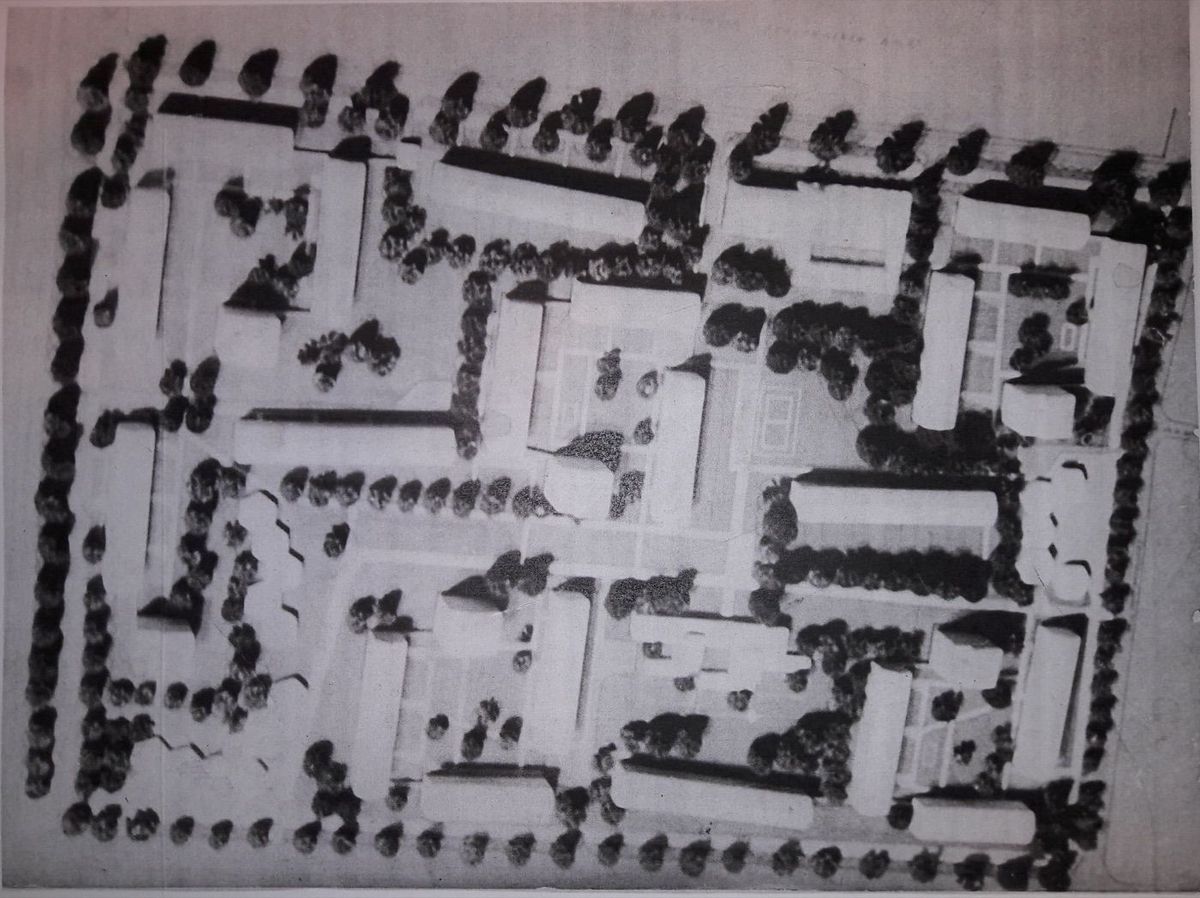
And so we have the outline of the estate, romantically called the “Osiedle Bezdomnych Kochanków” (the Estate of Homeless Lovers). The name does not stick, though, because in prudish socialism there are no lovers, only socialist families or individuals working for a homeland on its way to communism. Today all that is left of the “lovers” is the estate’s little Romea i Julii Street (Romeo and Juliet Street)… The original name, “Osiedle Młodych”, returns, for an estate laid out between today’s Wspólna Droga, Szaserów, Szklanych Domów and Garwolińska streets. 8 hectares, on which the estate is to be built according to the guidelines for the second building zone: the buildings are to be two-storey, with two shopping and service pavilions and a nursery school. There can be 800 flats on the estate, for a maximum of 3,000 people.
Read on: the building work, the cooperative years and the estate today
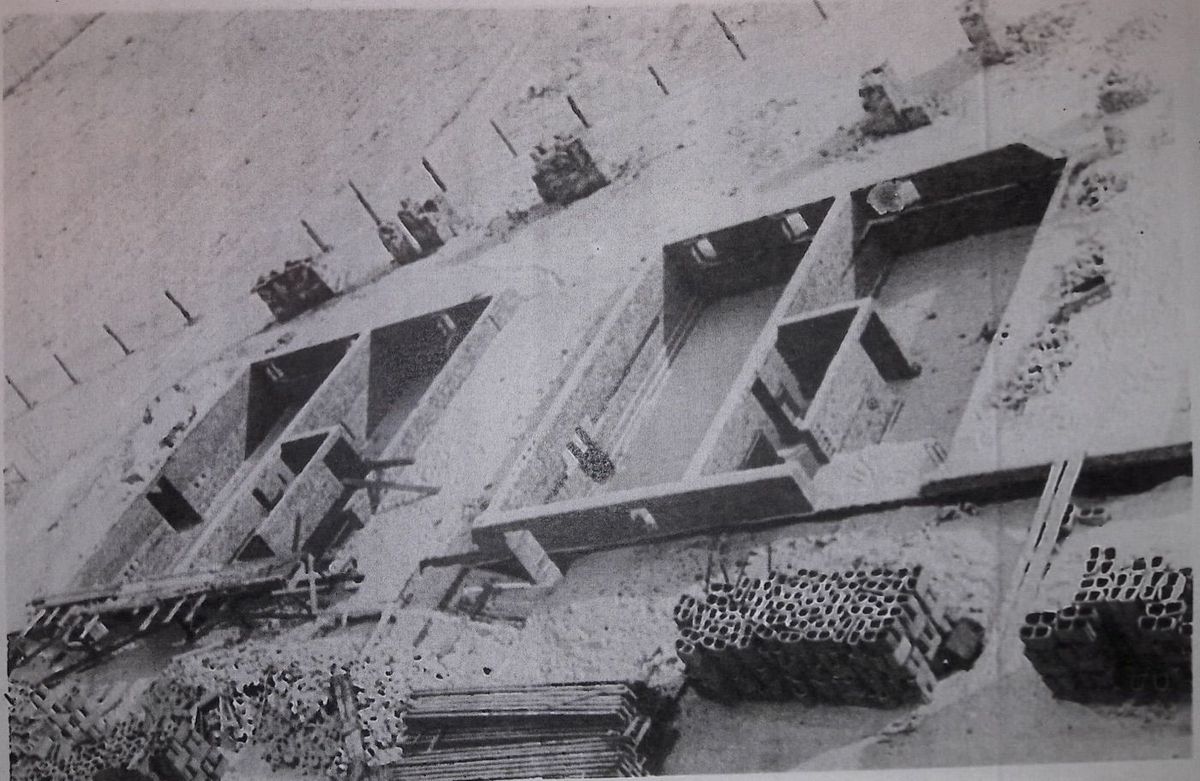
How to build? With local materials… So, with clay? That is one idea. In Germany and Romania it is even used quite often. In Poland an “experimental” two-storey building made of this material was going up in Malichy near Warsaw. So it seems that this will be the future of “Osiedle Młodych” too. But the commissioned surveys bring disappointment: there is no clay in the trial pits! There is sand, admittedly, which can be used to make concrete products, but no clay! What now? A new idea appears: a field plant making cement bricks and wood-chip and gypsum blocks will be set up on the estate site, with concrete elements to complete the whole. And brick “obtained” from the demolition of former German forts in Kostrzyn nad Odrą.
The estate goes up on fallow land and ploughed fields. There is no water supply, no sewerage, no gas. Central heating boiler houses and a power line have to be designed. None of the state design offices (and there were no others) wants to take this on quickly. Black despair. Once again, enthusiasm crashes against the wall of everyday life…
So the cooperative sets up its own design office. It is headed by Stefan Ciechanowicz, then a young engineer and the architect of the experimental building in Malichy mentioned above. He brings into the team architects who also work at design offices or companies with a decisive say in the so-called implementation approvals. This really does make it possible to design the whole estate within 6 months! The engineers Tadeusz Kobylański and Stefan Ciechanowicz (who still lives on the estate) and their team will receive an award from the Committee for Town Planning and Architecture for it in 1957.
On 15 June 1957, in the foundations of the “point block” now at Szklanych Domów 7b, the cooperative’s vice-chair, the journalist Ewa Wacowska, accompanied by the Minister of Construction, the Mayor of Warsaw and other dignitaries, ceremonially places the foundation act of the estate under construction and sets the cornerstone. A sealed metal box, which also holds a copy of “Sztandar Młodych”, still lies under this block today.
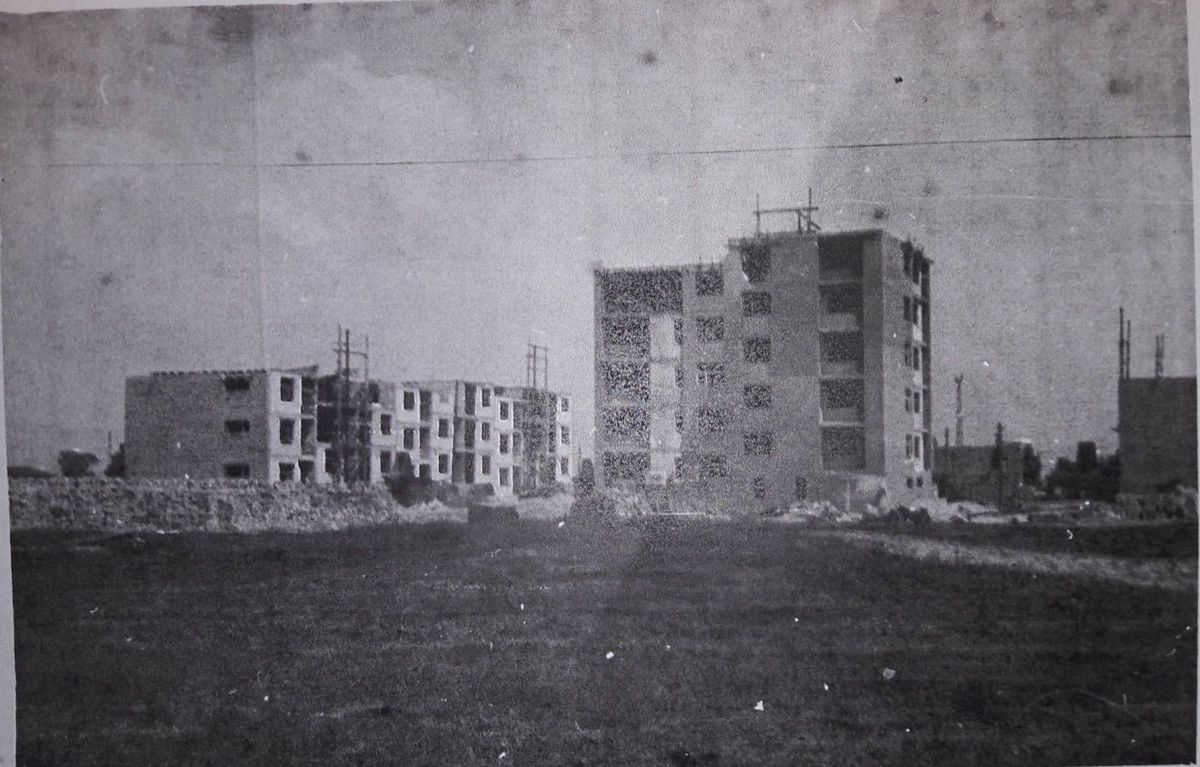
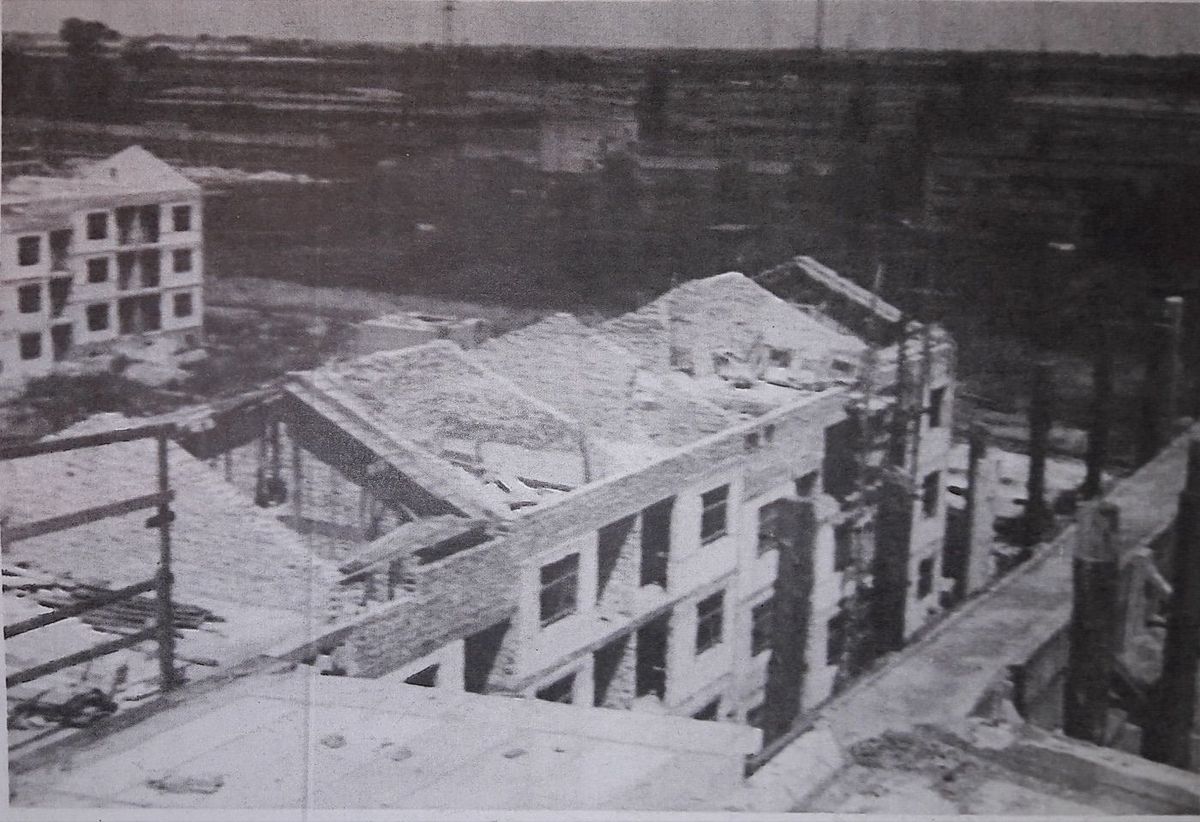
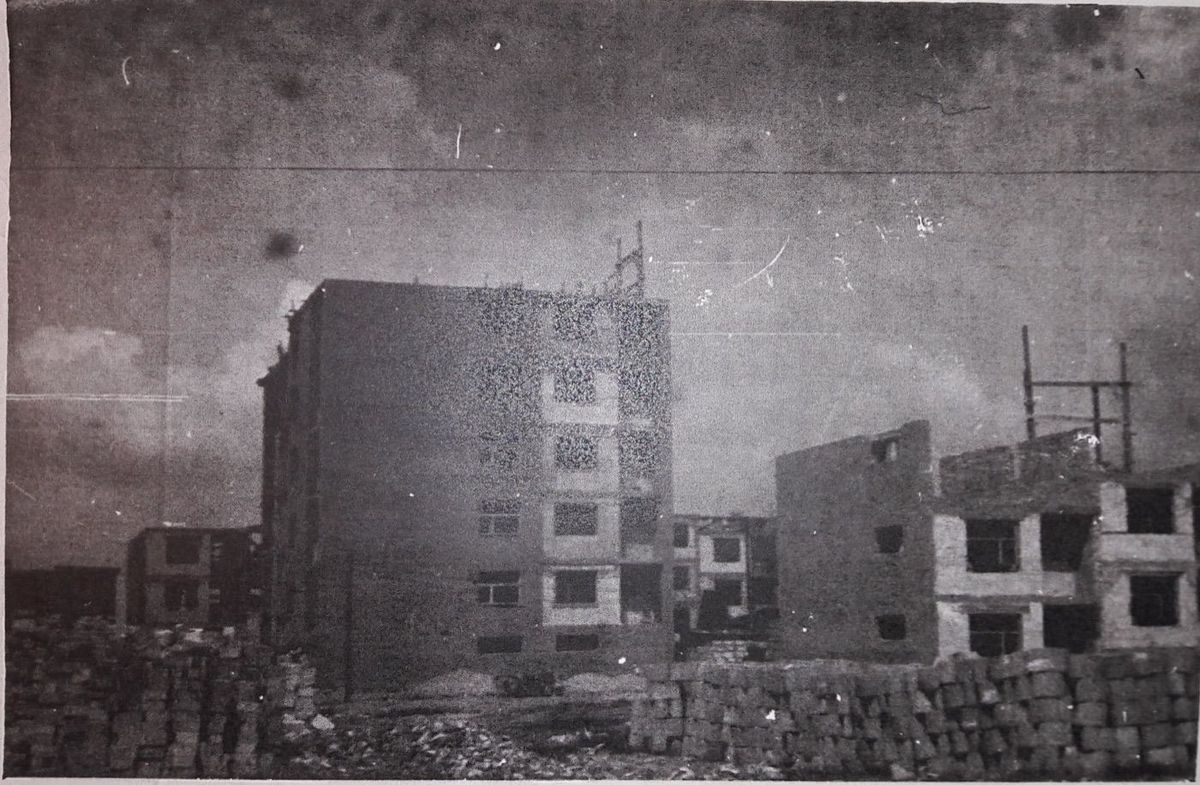
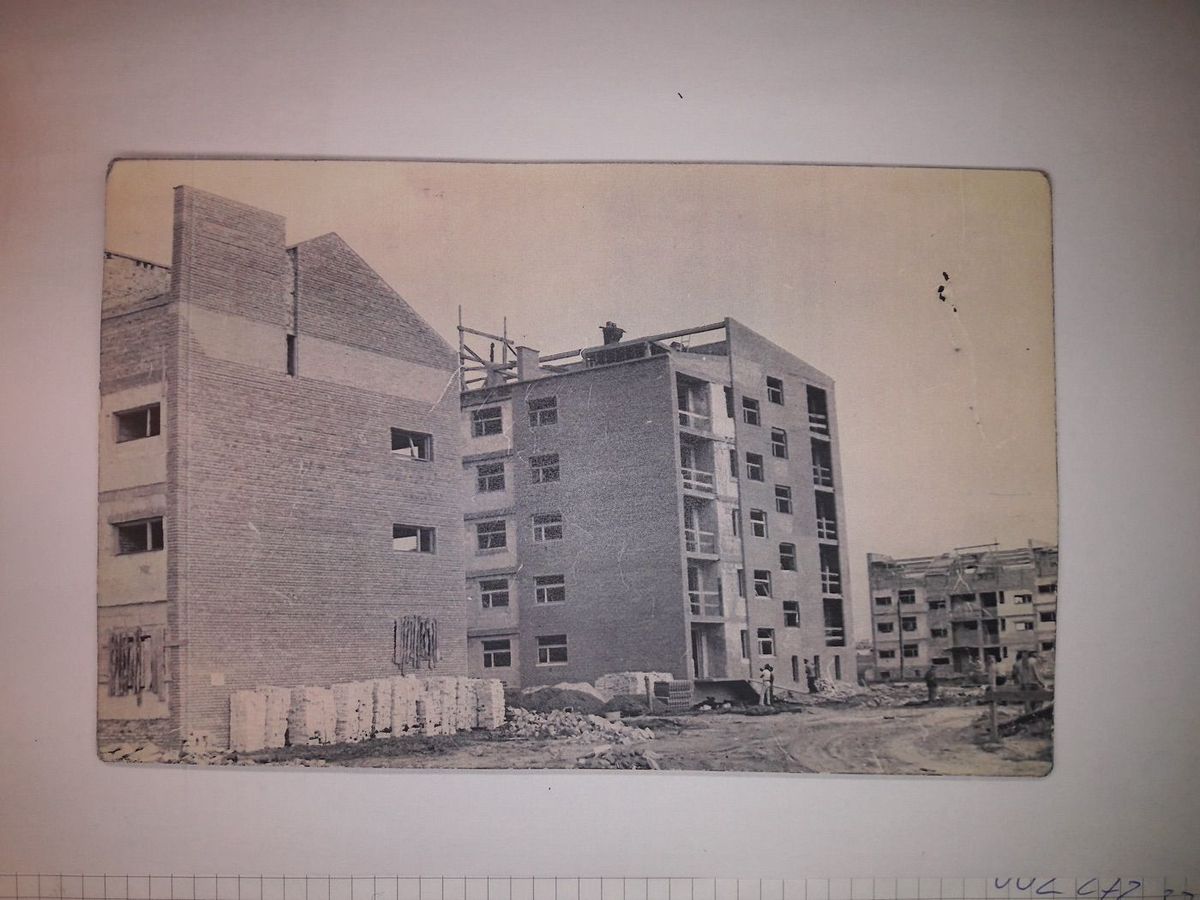
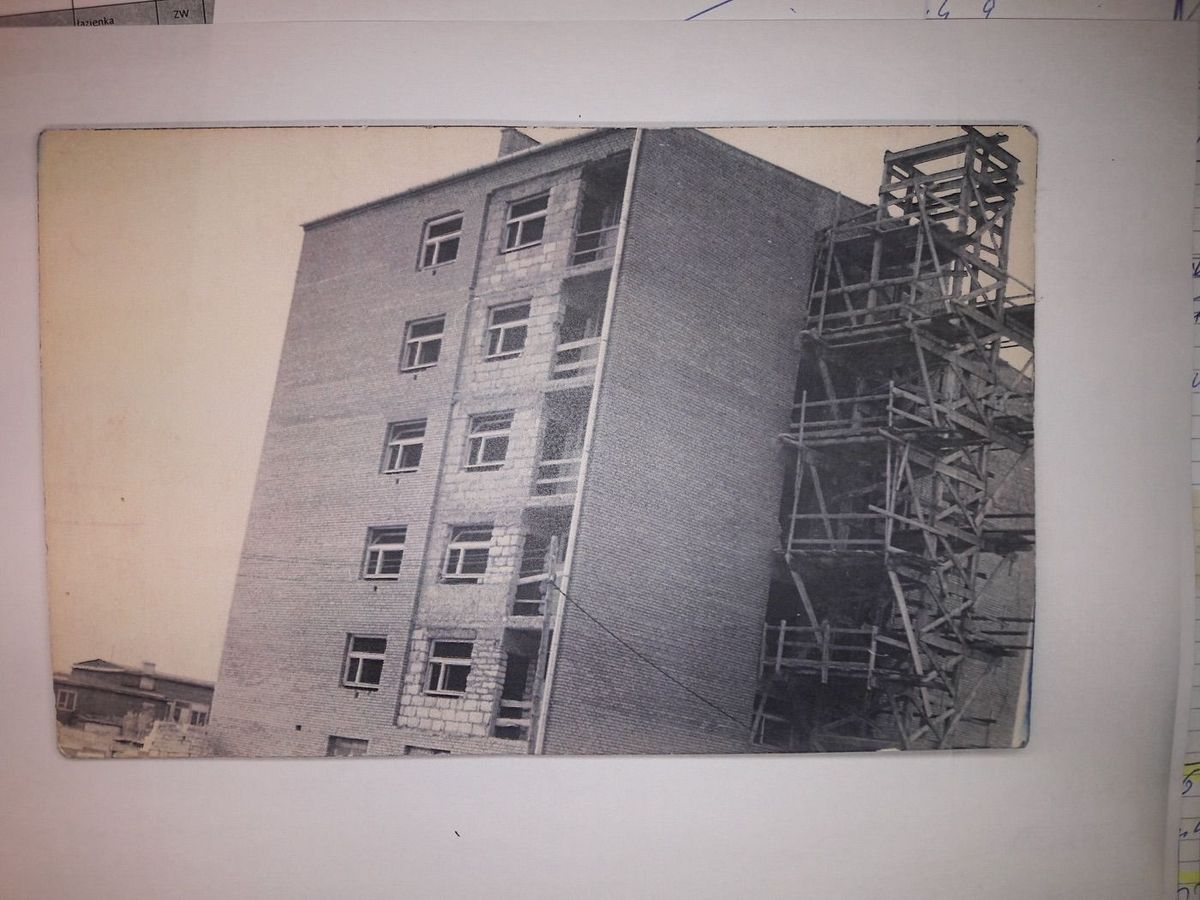
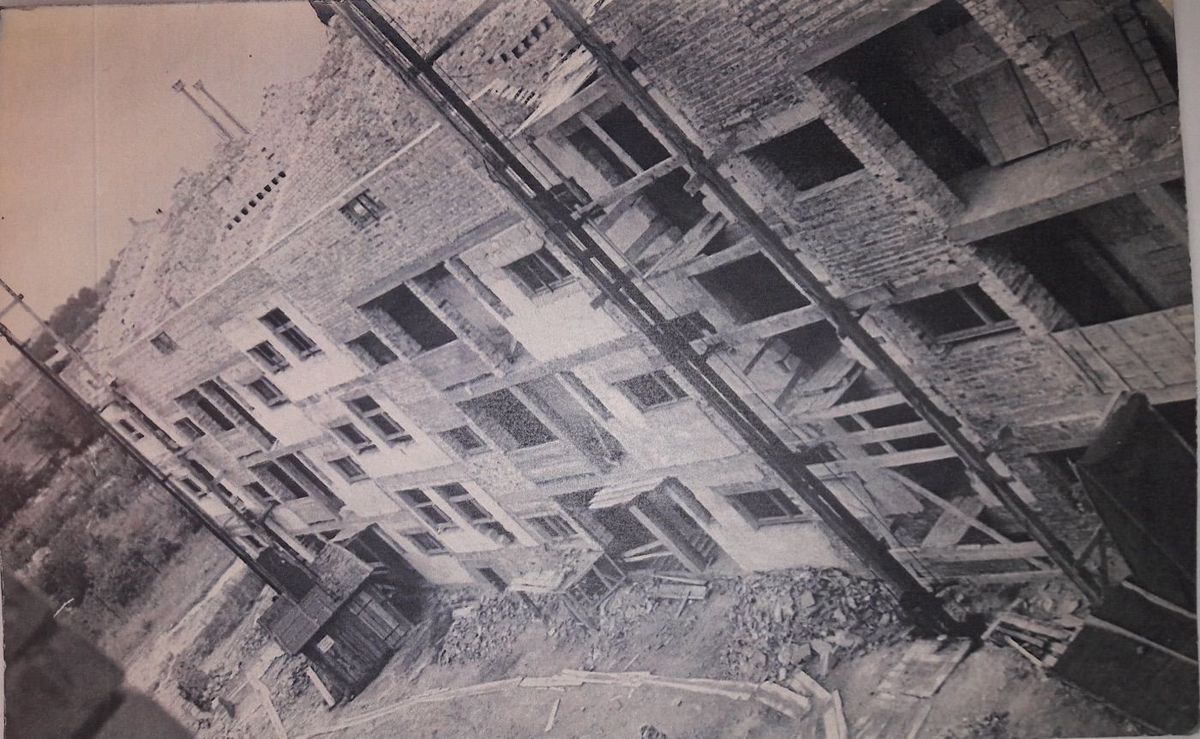
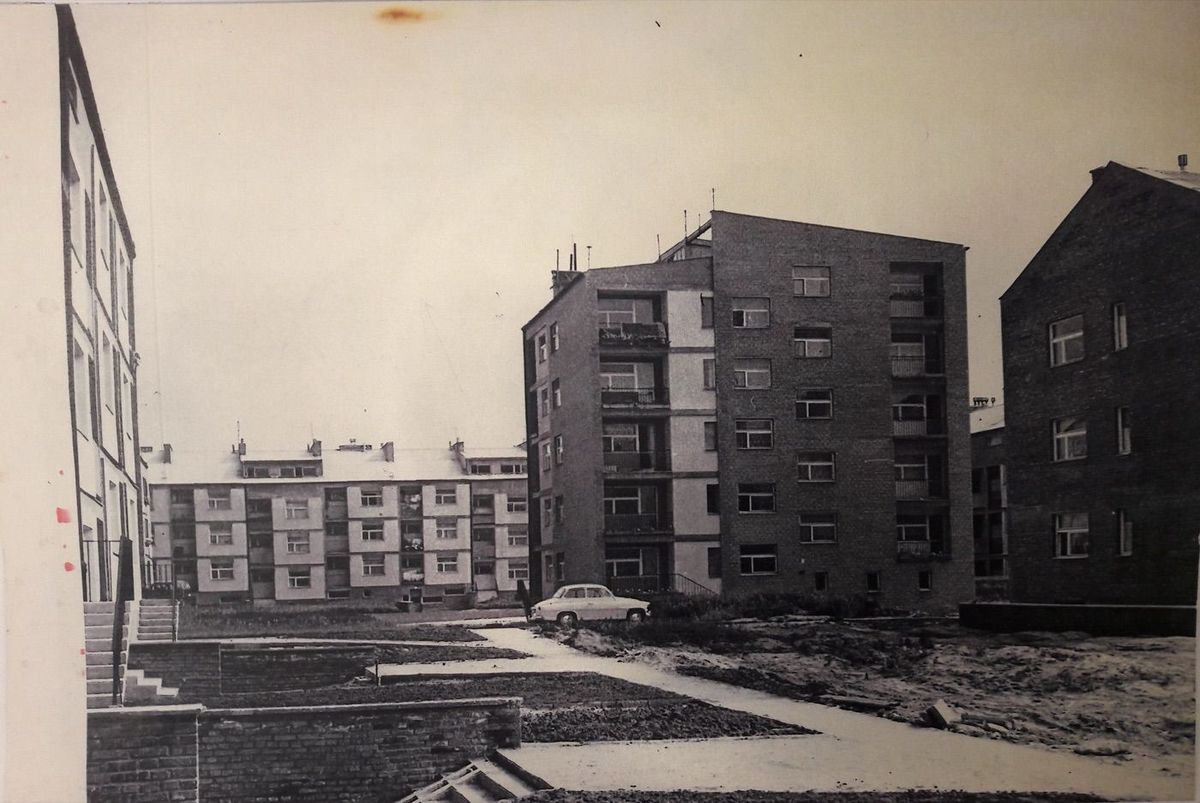
Building begins. First the two-storey blocks at Garwolińska 26 and 26a. Then more, going up faster now, because the home-made way of building happily loses out to reality. Building materials are scarce, there are no legal regulations, the investment managers change (three times in a short period), and in the end Chairman Goskrzyński himself has had “enough”. He resigns.
And since the party authorities are starting to look more favourably on the housing cooperative movement emerging all over the country, “Osiedle Młodych” too is given quite a different status, somewhat state-run, but with good results.
The new chairman, engineer Tadeusz Bilewicz, is granted the right to give up building the estate by the direct-labour method, and he eagerly takes it: the construction is entrusted to professionals from KBM Warszawa Praga. The problems with getting building materials, machinery and fittings for the flats come to an end (by the standards of the time). In 25 months, 27 buildings with nearly 780 flats go up. History records the first tenants: in the building at Garwolińska 26a the first keys go to citizens and founding members Latoszek, Osiekowicz, Balana, Dworecki, Wesołowski, Jakubiak and Tłustochowicz. Then others follow. By January 1959, 67 members of the cooperative (that is, young workers from Warsaw factories) are already living on the estate, and new buildings go up every month.
And then… And then in 1961 the cooperative is granted perpetual usufruct of “its” land. In the next 55 years only one more building will go up here, in 1966. The “young workers” of Warsaw’s factories marry, their children are born, and the buildings age, perhaps even faster than blocks of the same age on other estates, because for years they were not properly maintained and repaired. The “Osiedle Młodych” cooperative grows and branches out, having less and less in common with the roots it grew from.
And about 1,500 people live “on the family land”. In 2004 they leave the “Osiedle Młodych” cooperative and now call their home ground SM “Szaserów”. It was recently entered in the register of historic monuments; residents joke that the age of the main tenants was probably taken into account. More than 20 per cent of them are already over 80, and more than 60 per cent are older than the estate’s first buildings… A distinctive site, huge by the capital’s standards, where the residents of 28 mostly low buildings have as much as 8 hectares of land to look after. It takes some financial gymnastics to keep it up.
But from the start of this text we have said that this estate is unlike any other… Just as when things were bad before (when difficulties piled up at the start of the building work), so now too they know how to reach for unconventional methods. Because, on the whole, things went badly until 2010: until then the new cooperative had no luck in choosing managers who could cope with the enormity of the tasks. The Supervisory Board, the Management Board and the cooperative members themselves could not agree on which way to go. Everyone knew that renovation was needed, and quickly, but with what money?! How to raise the funds? What first? And there was one quarrel after another. No Supervisory Board completed its term, and no Management Board lasted long enough to put its vision into practice.
In 2010 everyone had probably had enough and… at last governing bodies were formed that lasted their terms and did what the tenants had been waiting for. The estate was modernised. All the buildings were insulated, their façades were changed, the electrical wiring and heat exchanger stations were replaced, the dangerous gas water heaters were removed, and all the staircases were renovated and painted, all within a short period of 6 years.
– Between 2010 and 2015 we spent more than PLN 21 million on repairs and modernisation, Krzysztof Jurewicz, chairman of the board of SM Szaserów since 2010, tells “Mieszkaniec”.
– That is the equivalent of more than 20 years of the cooperative’s renovation fund. Where did we get the money? From various sources. Among other things, we used a thermal modernisation loan from a special fund set up by the Council of Ministers for buildings put up before 1961 (which gives a special additional bonus for the work done). This loan is not secured on the residents’ property; the collateral is the renovation fund. Through “Veolia” we used the so-called Swiss funds, which support the modernisation of heating networks. With the consent of the cooperative’s members we sold two plots that belonged to us: a “Biedronka” shop was built on one, and on the other a developer is just finishing a residential building. All this made it possible to carry out such a huge amount of renovation work without any risk to solvency and without losing financial liquidity. Throughout this period, and now, the Cooperative’s financial situation has been stable.
– Nothing, I repeat, nothing in the cooperative movement will succeed if its governing bodies, the Supervisory Board and the Management Board, do not work together and do not have the support of the cooperative’s members. We succeeded because from the start we have been going in the same direction, says vice-chair Ewa Łukszo. – In 2010 Ms Magdalena Dobrzyńska became chair of the Supervisory Board, a new Management Board was formed and slowly, despite the members’ considerable mistrust at first, things began to fall into place. Now the Management Board works in a completely different atmosphere because, I think, we have proved that we work for the good of this estate. We have renovated the buildings, and we look after the greenery (we have more than 550 trees alone!) and these large, beautiful grounds without placing much of a burden on residents’ budgets. Mr Andrzej Rajkiewicz now chairs the Supervisory Board, and together with him we are starting new projects, including the seniors’ project.
Friendly to seniors
In 2005 the Sejm passed the so-called Seniors’ Act. It obliges the government to monitor the situation of older people, in order to prevent their exclusion and to encourage action that improves their position in society.
Vice-chair Ewa Łukszo:
– We welcomed the passing of this act with joy. We live with the concerns of our estate’s residents, and it is a particular estate. 65 per cent of its 1,500 residents are over fifty, 23 per cent are aged 61–80, and 22 per cent are over eighty. Many of these people built their own flats or helped to fit them out with their own hands. So they are deeply attached to their home ground. Advice that, when they can no longer walk, they should move in with their children or to a building with a lift on another estate is not for them. Emotionally, such a move is out of the question. This is where you can best see the truth of the saying that you don’t transplant old trees…
Membership and housing inspector Natalia Lewkowicz:
– In short, this estate has to become friendlier to the many seniors living here. We decided to approach it professionally, once the real needs had been identified. In March this year the new Chair of the Supervisory Board, Mr Andrzej Rajkiewicz, contacted the Institute of Social Policy at the University of Warsaw, and as a result it was decided to work together on research. It will be carried out on the estate by a team made up of Professors Barbara Szatur-Jaworska and Barbara Rysz-Kowalczyk and Dr Aleksandra Zubrzycka-Czarnecka. There will be an assessment of seniors’ needs, a map of support institutions, a diagnosis of the state of care and, most importantly, a plan of remedial action. The research has already begun. The first interviews with our seniors will be conducted by the “Cotopaxi” Film Workshop Association, and later ones by University of Warsaw students on placements. The record of these interviews and consultations will be the basis for the work on the assessment of seniors’ needs.
Chairman Krzysztof Jurewicz:
– Without waiting for the results of this research, we are doing the obvious things. We organise outdoor events and picnics for our seniors to make their lives more pleasant. They take the form of, for example, concerts under the windows, where residents listen to the music from their balconies, or sitting on benches or on their own chairs. We make contact with non-governmental organisations that have interesting things to offer people aged 50+, and we tell our residents about the opportunities they can take up. Many residents have problems walking or with their hearts. There is no room for lifts in the two-storey buildings, although lifts would make getting around much easier for them, but we want to install internal lifts at least in the few 4-storey buildings we have on the estate. The possibilities are there, and we will apply for funding (including European funding) for this. The cooperative spoke up in the public consultation on Warsaw’s development strategy to 2030, raising the problem of fitting lifts to residential buildings put up in the 1950s and 1960s, when there were no relevant technical requirements yet.
The estate then and now
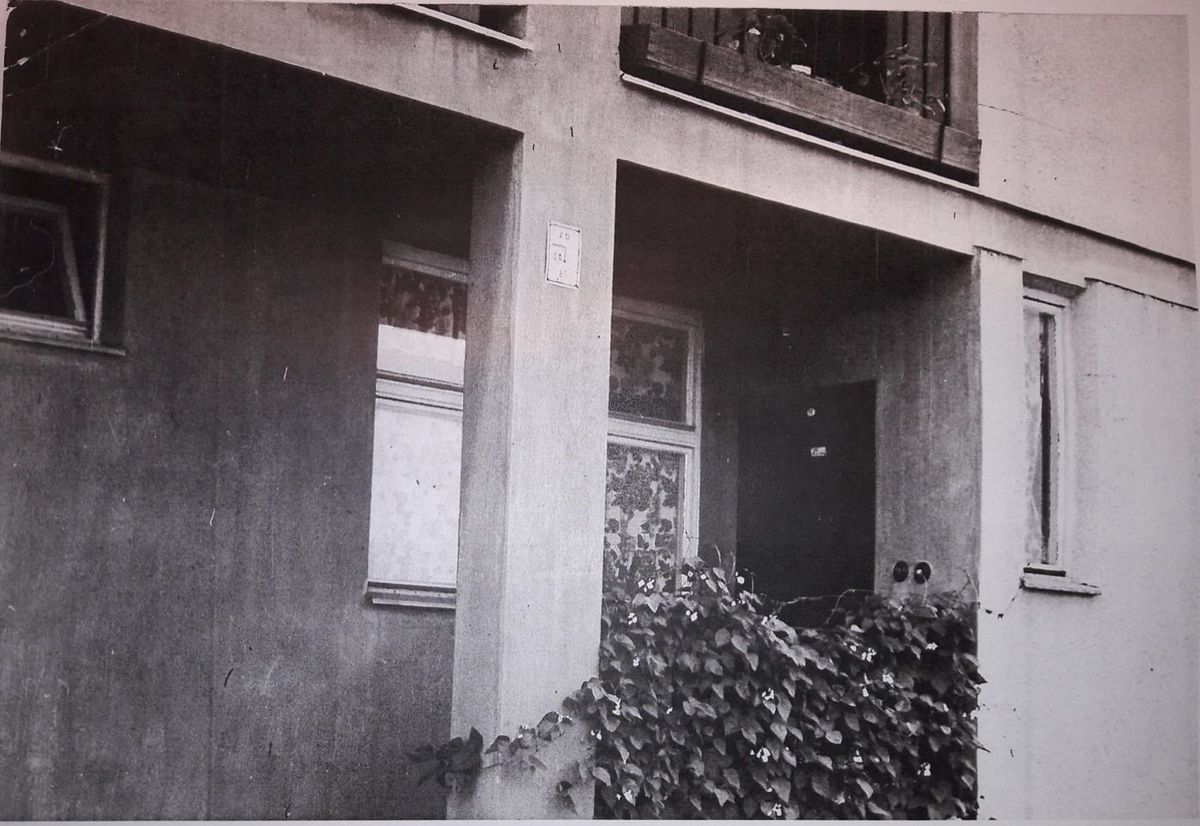
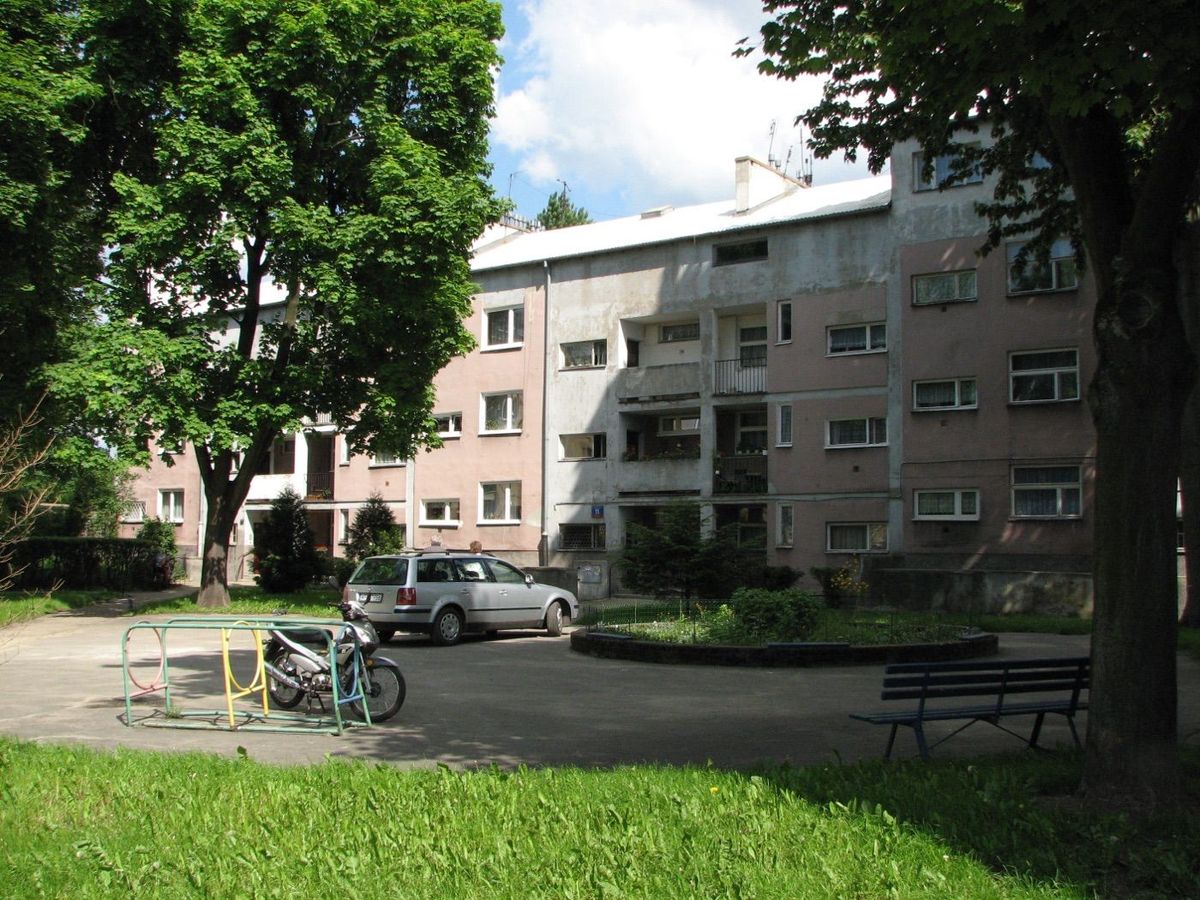
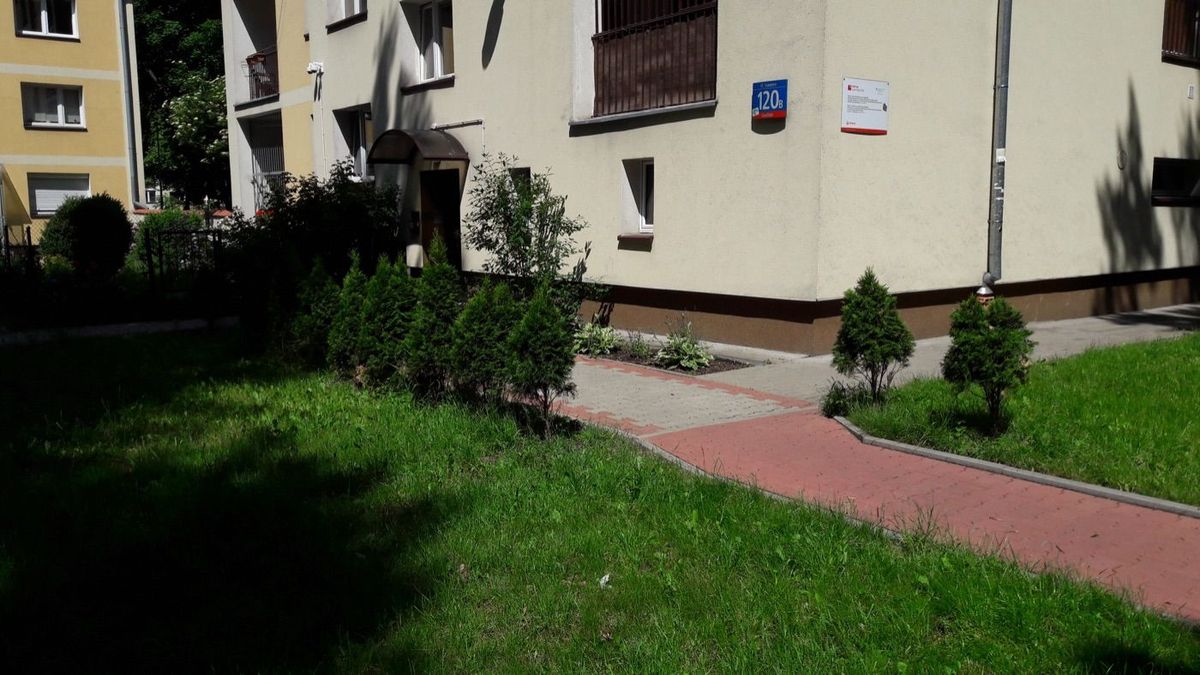
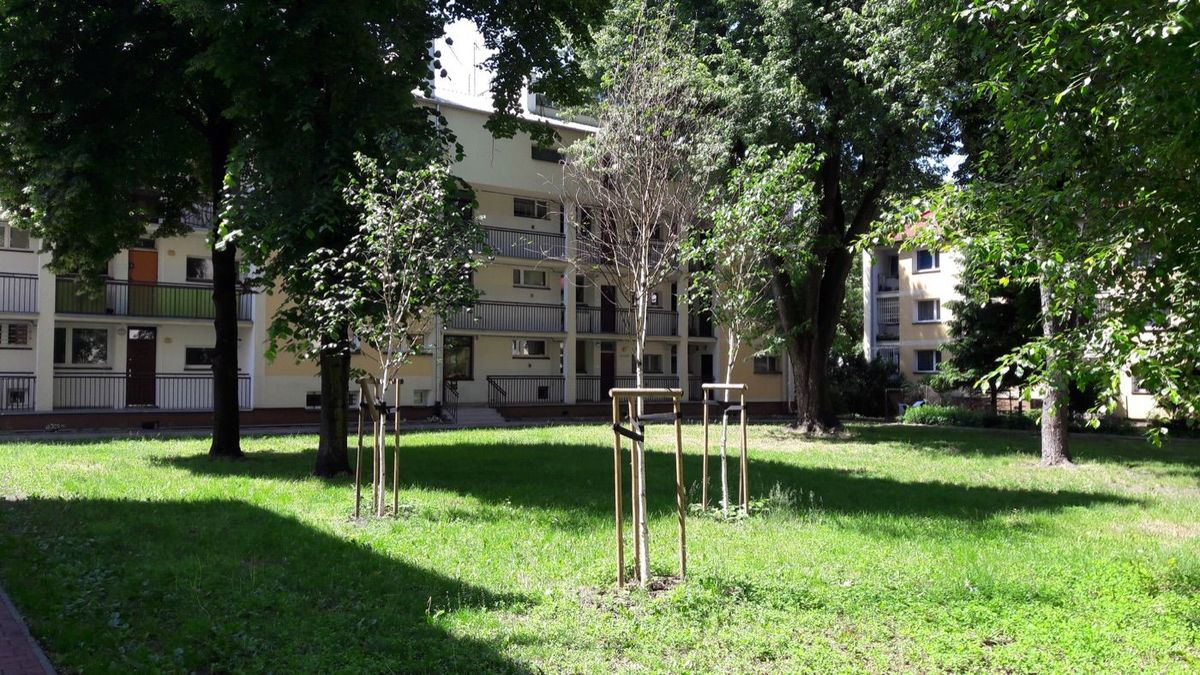
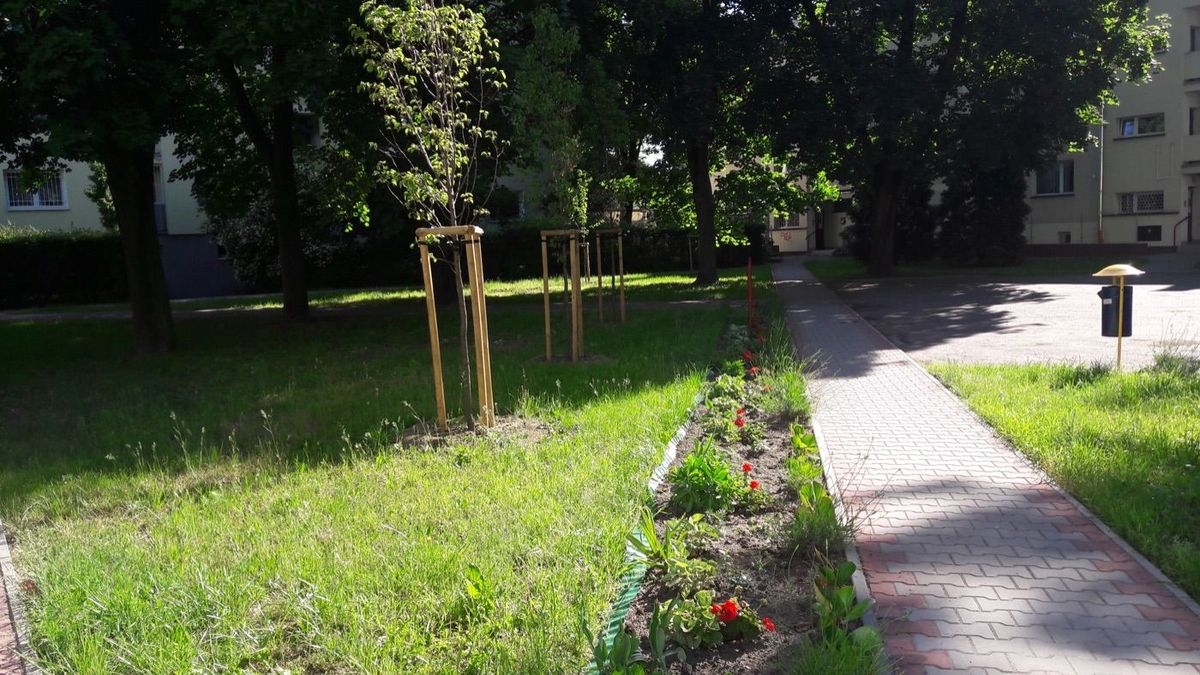
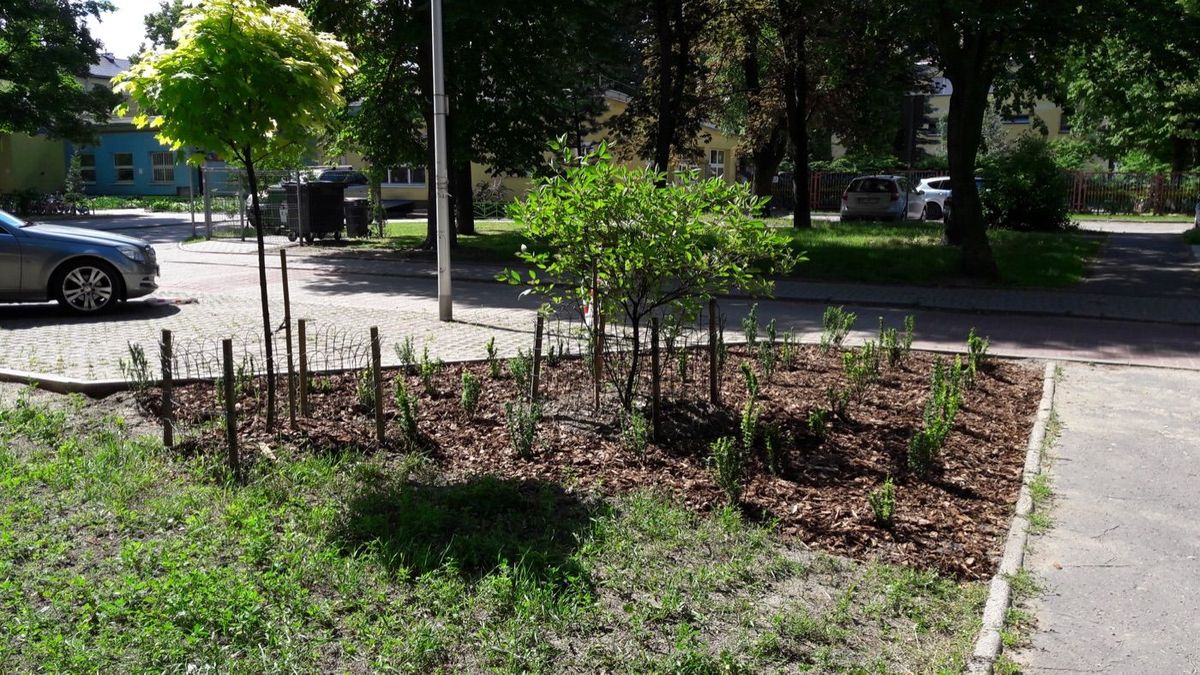
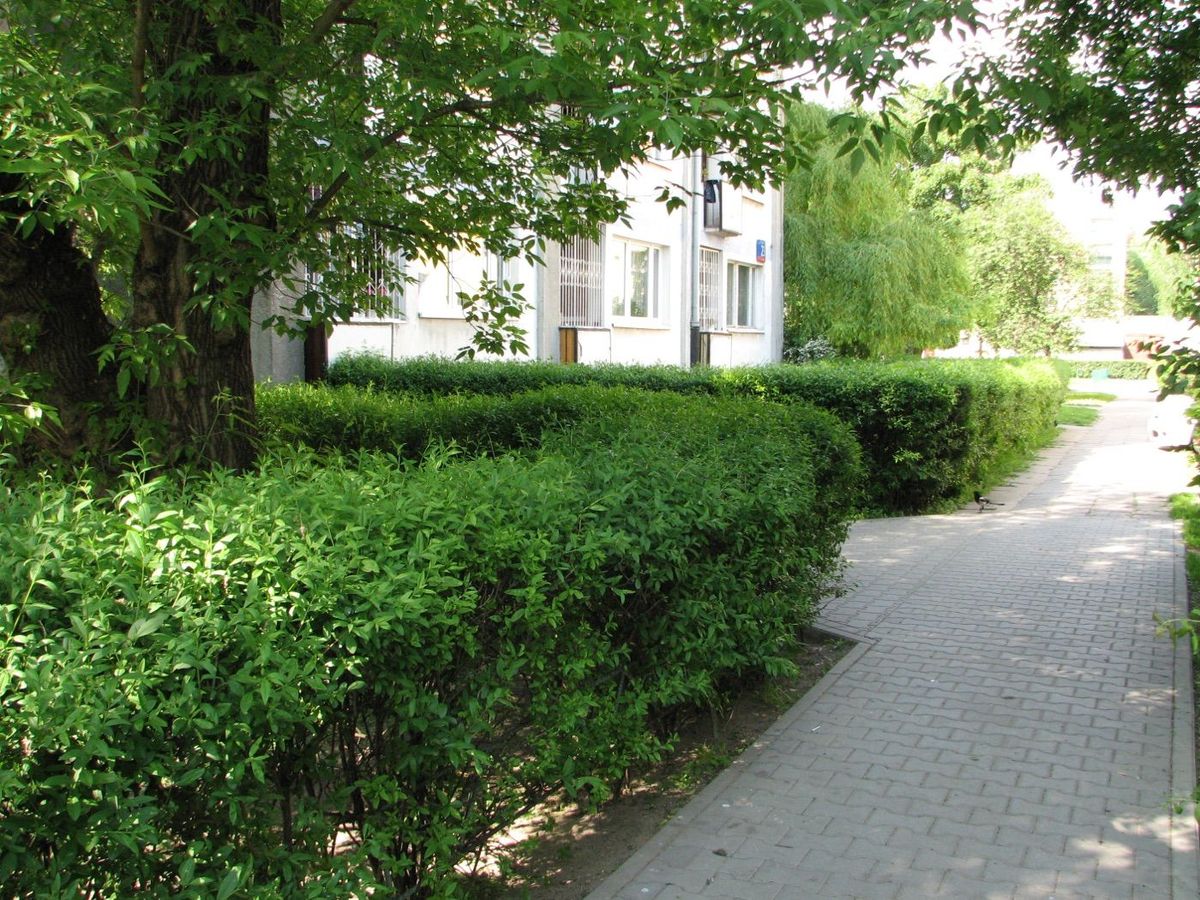
Photographs of the building work in the late 1950s and of the estate today. Click a photo to open it full screen.
Building work, late 1950s
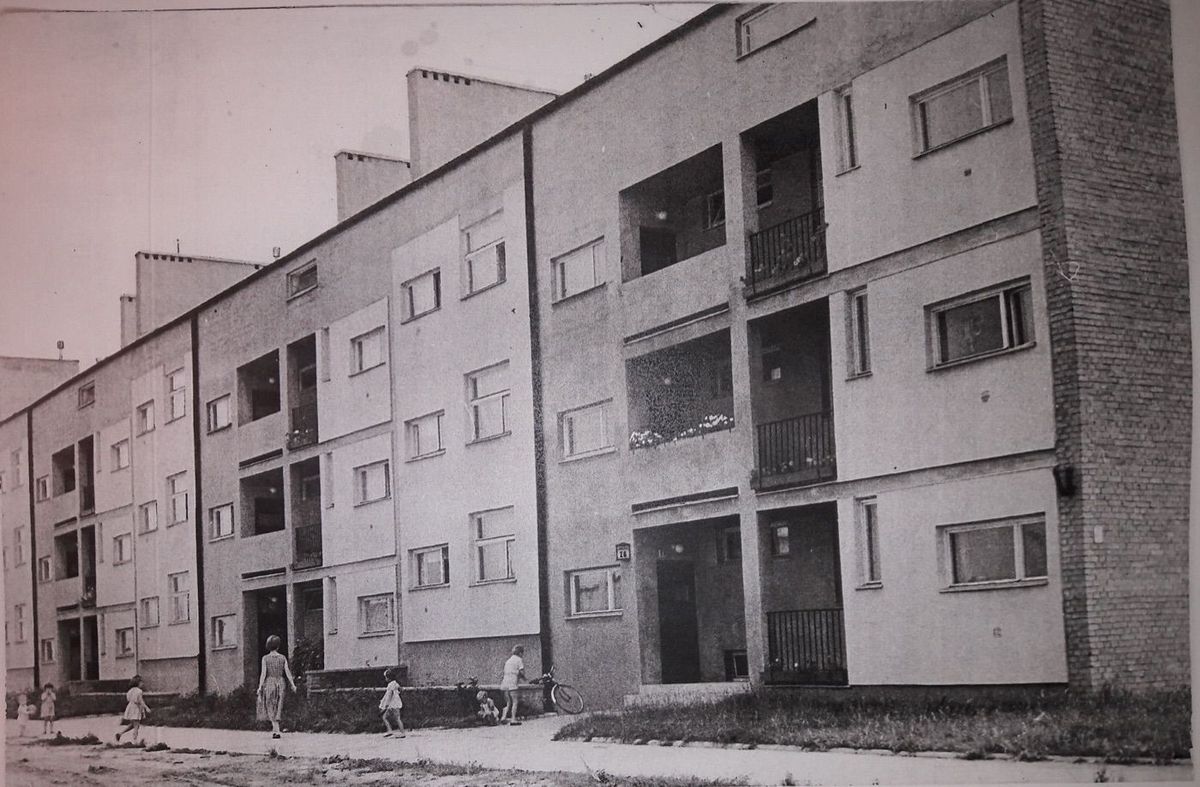
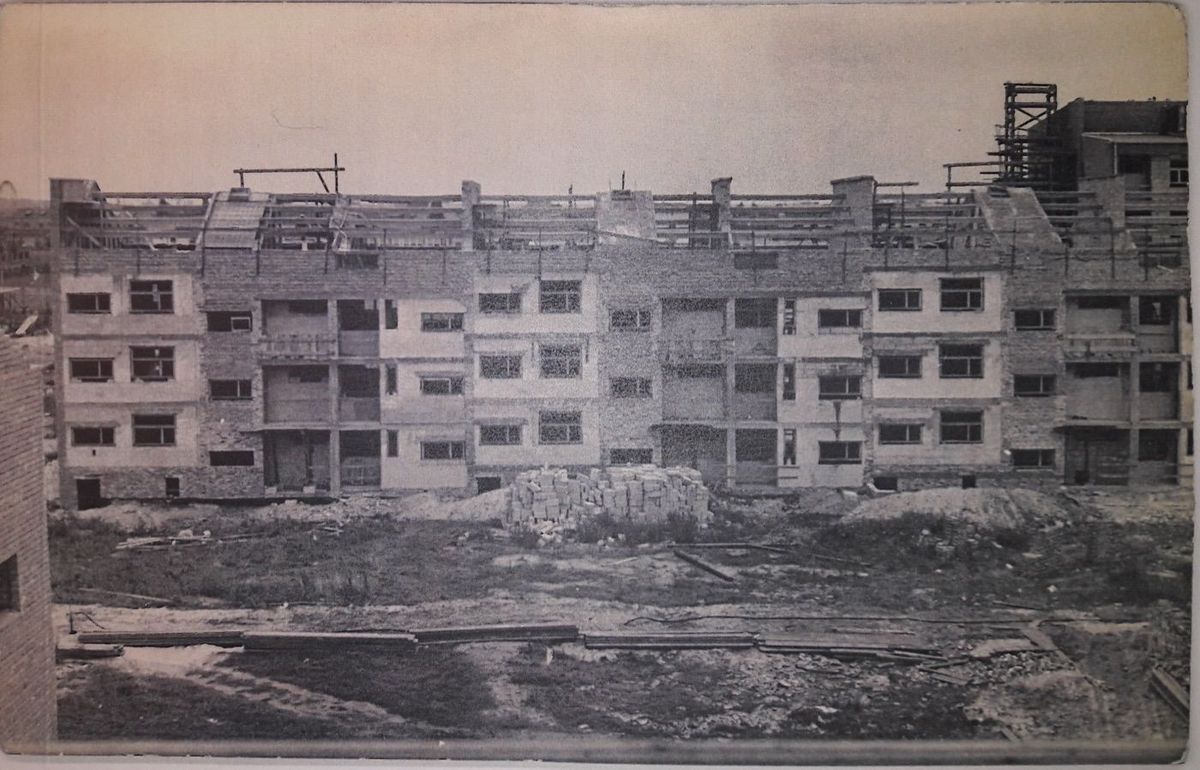
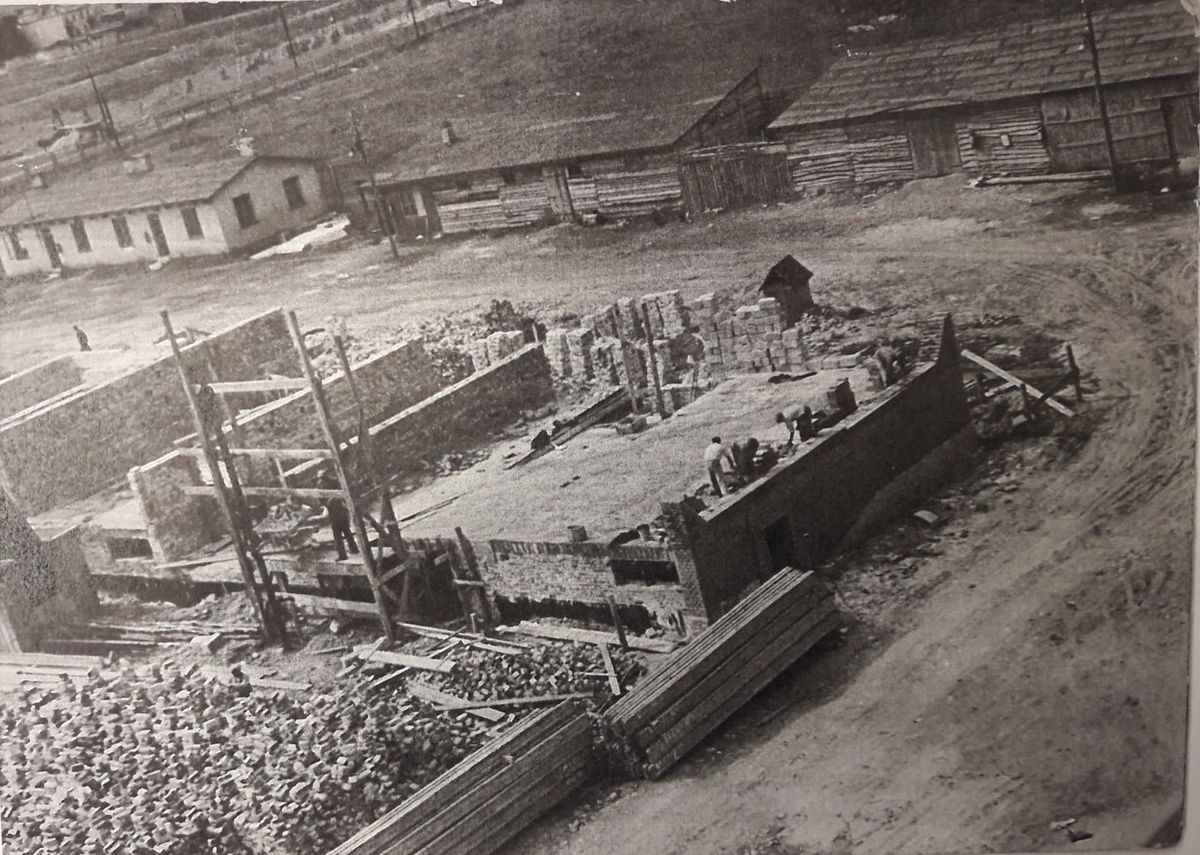
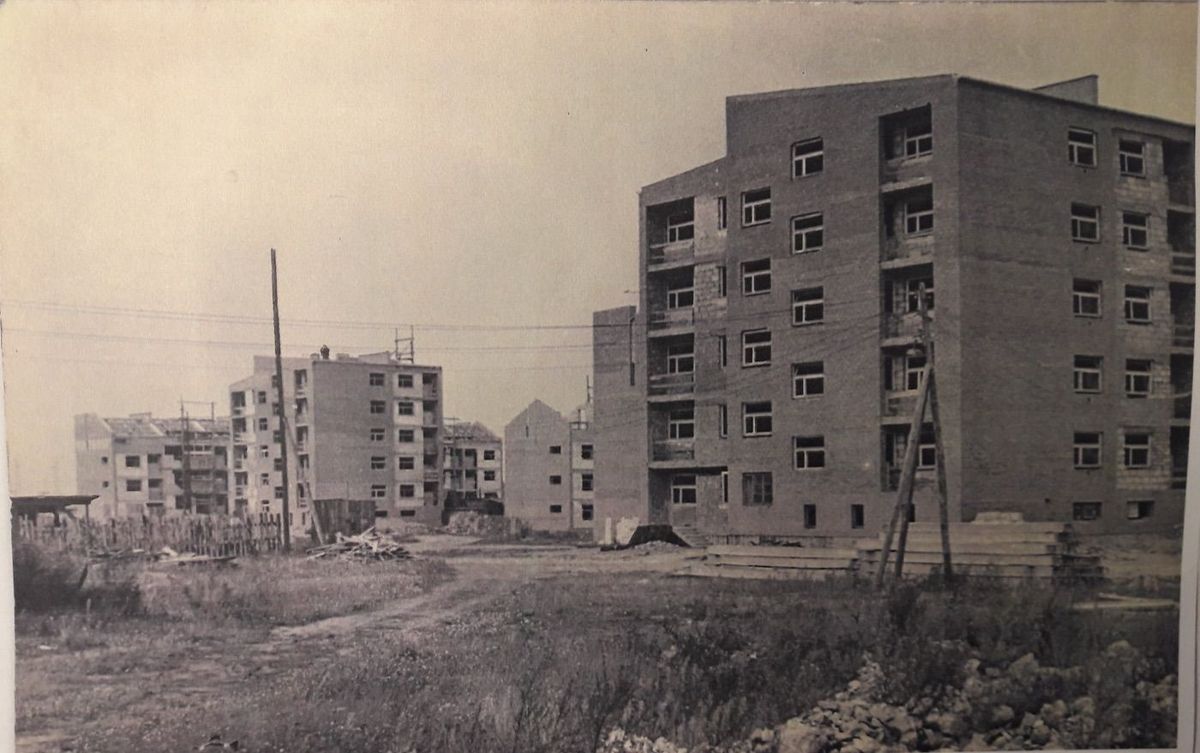
Today
Residents
Click a portrait to open it full screen. Under each name is the full interview, and for 15 people there is a recording too.
 Stefan CiechanowiczRead and listen
 Stanisława DziubackaRead and listen
 Łucja GrabowskaRead and listen
 Antoni SzczęsnyRead and listen
 Michał ŚwięckiRead and listen
 Maria WójcickaRead and listen
 Danuta MatyjekRead and listen
 Lucyna DzięciołRead and listen
 Ewa and Kazimierz KudłacikRead and listen
 Elżbieta PrusRead and listen
 Weronika KawęckaRead and listen
 Adam WernikRead and listen
 Łucja and Władysław WilińskiRead and listen
 Zofia Rupiewicz-OstrowskaRead and listen
 Krzysztof OstasRead and listen
 Dorota BrodowskaRead and listen
 Zygmunt ZarembaRead and listen
 Anatol KarońRead and listen
 Joanna CzaplaRead and listen
 Mirosław BoguskiRead and listen
 Edwarda Dworecka and Urszula Dworecka-SiergiejczykRead and listen
 Ewa ŁukszoRead and listen
 Krzysztof JurewiczRead and listen
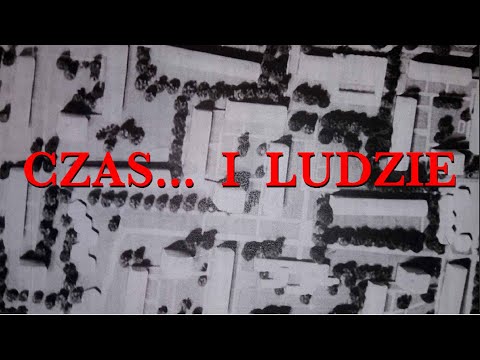 FilmCzas i ludzie1 hour 15 minutesWatch
Czas i ludzie
“Czas i ludzie” (Time and People): the story of the estate. A documentary about the history of the “Szaserów” Housing Cooperative estate in Warsaw’s Praga-Południe district, about the people who built it and about what it has become today. The film was made for the estate’s 65th anniversary. Running time: 1 hour 15 minutes. The film is in Polish. Directed and produced by Tomasz Bajko, TeleProdukcja.pl.
A project of the Piwnica Poetycka ENS Foundation and the “Szaserów” Housing Cooperative, co-financed by the City of Warsaw under the Cultural Heritage of Warsaw programme. Project partner: Veolia.